
5 Ways Bar Pour Cost Actually Leaks (And Why Your % Lies)
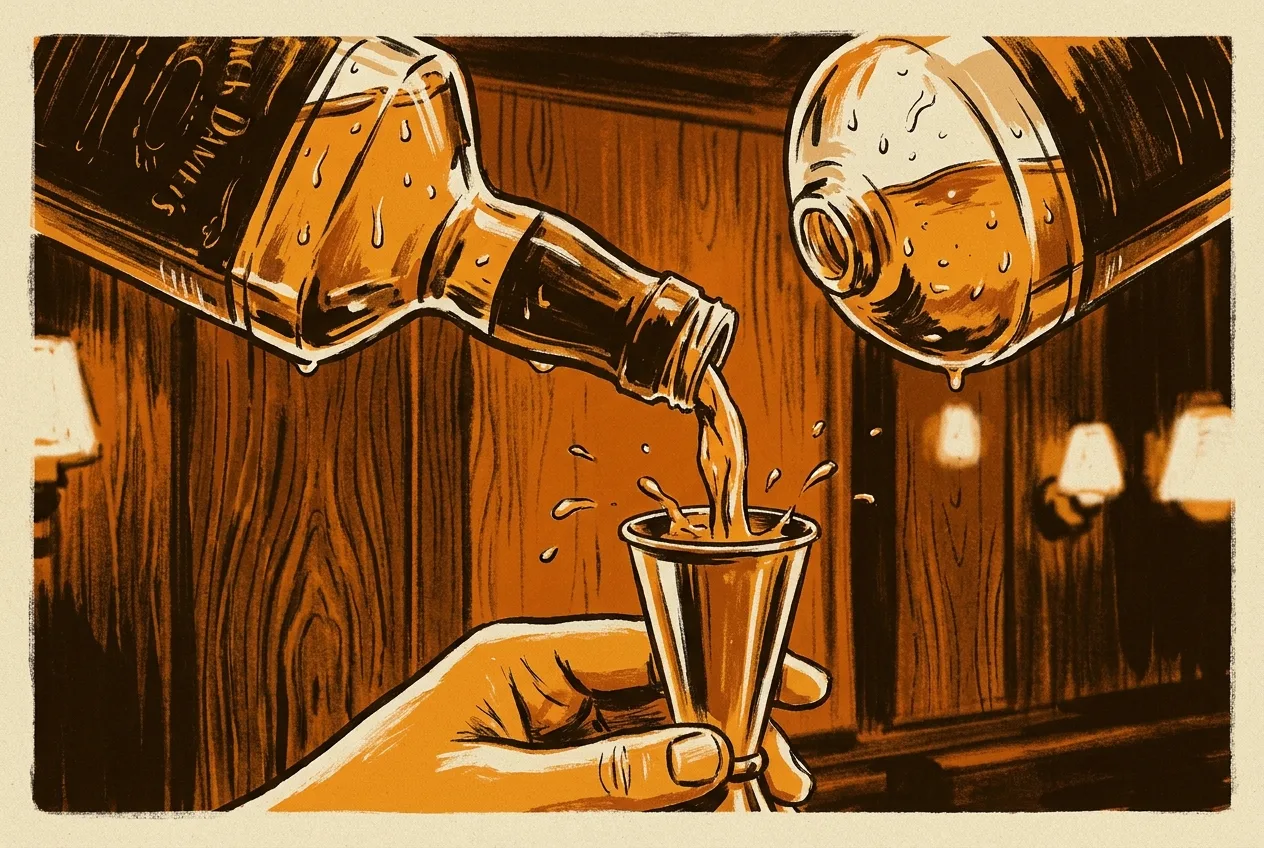

I poured 1.7 ounces when I started behind the bar. I called it 1.5. I’d watched a YouTube video about cocktail technique and the guy on it free-poured everything, so naturally I free-poured everything. The senior bartender caught me at the end of my second shift, handed me a jigger, and said “this is one and a half ounces. Yours wasn’t.”
He wasn’t mean about it. He just held up the jigger like it was a remedial reading book. I don’t think I’ve ever felt smaller in a hospitality job.
That moment is also the entire reason I have opinions about pour cost.
I started behind the bar at Cosmos Taverna in California and worked my way up to general manager over five years. The bar program ran the full range in that time. Busy, slow, profitable, leaking, and twice a quarter, mysteriously profitable for reasons that always turned out to be a vendor short-shipping us. The pour cost number was my early warning system. Learning to read it correctly took longer than I’d like to admit.
Here’s the thing nobody tells you when you start running a bar program: the pour cost percentage tells you something is wrong. It does not tell you what.
Operators see a 28% pour cost on liquor (when the healthy range is 18–24%) and immediately assume theft. That’s almost never the first answer. In five years of running variance, I watched pour cost drift hot for five very different reasons. Theft was the rarest of the five. Here they are in order of frequency, with the operational fix for each.
1. Free pours on the well #
This is the single biggest leak in most indie bars. New bartenders don’t trust jiggers, so they eyeball it because that’s what they saw on TV, on YouTube, in cocktail competitions. Every one of us was that bartender once. Two ounces becomes two-and-a-half before anyone notices, and multiply that by three hundred drinks on a busy Saturday and you’ve given away more product than a comp tab would ever have flagged.
Industry-standard cocktail pour is 1.5 oz (Toast, USBG curriculum). A consistent 0.25 oz over-pour on a 1.5 oz spec is a 17% give-away on every drink. Nobody is stealing. Nobody is malicious. The pour cost just bleeds.
The fix: measured pour spouts on every well bottle. Not jiggers. Bartenders hate those during a rush, and a senior bartender holding a jigger up at the end of a shift is doing remedial training, not service. Pour spouts give you a consistent measure with no decision required. Train every new hire on the spec, do a one-shift audit at the 30-day mark, and re-train if it’s off. Pour spouts run about $4 a bottle. A 4-point drift in pour cost runs hundreds per shift. That math isn’t close.
2. Buyback culture #
This one I learned the hard way. Regulars walk in. The bartender greets them by name, pours their first drink, and “this one’s on me, I got you.” Round two is on the house “because you brought your friends.” By the end of the night, the bartender has comped four drinks across three regulars and rung up zero of them.
On a slow Tuesday this is fine. It builds loyalty, regulars come back, and they tip well. I’d do it every slow Tuesday again.
On a busy Saturday it’s a real cost. Multiply by every bartender, every shift, and you’ve got a five-figure annual leak that doesn’t appear in any report because nobody rang the comps. Same hand. Different night. Same untracked drink.
The fix: a comp policy with a daily dollar cap per bartender, rung in the POS as a comp every time. The point isn’t to kill buybacks. They’re part of running a hospitable bar. The point is to count them. When buyback budget shows up as a cost line, you can manage it, and when it doesn’t, it manages you. Nobody on staff likes that policy. Run it anyway.
3. Comps not rung in #
Different from buybacks. This is the rest of the comp universe, staff family meals, manager comps, walk-in repairs the AC tech got fed, the priest who blesses the place every Christmas, the regulars on their birthday. All real, all human, all part of running a place people love.
But each one is product going out the door without a sales line attached. If your POS doesn’t have a comp line that captures it, your pour cost % gets calculated on cost-spent ÷ revenue-rung. The cost is real. The revenue isn’t there. So the percentage looks like a leak when nothing leaked.
The fix: a comp button in the POS for every category, staff meal, manager comp, vendor, regular. Push the button every time. The comp was never the problem. The undocumented comp is.
4. Vendor short-ships and receiving errors #
This one is sneaky. The truck pulls up Tuesday morning, and whoever’s on receiving signs for what’s on the manifest without cracking every case. A case of premium tequila is short by two bottles. The vendor short-shipped it, you signed for the full count, and now you’ve paid for product that never enters your inventory but still shows up on the invoice as cost.
Same problem in reverse: you receive a case but the bottles are damaged or the wrong product, you don’t catch it, and you eat the cost.
In five years at Cosmos I caught vendor short-ships often enough that I built a habit of opening every spirits case at the door. Twice a month it caught a discrepancy. Most vendors fix it without an argument once you ask, they know the game. (I once had a driver wait twenty minutes while I counted three cases. He was unhappy. We were both still less unhappy than the alternative, which would have been me discovering the short two weeks later, when the credit window had closed.)
The fix: receiving discipline. Every spirits case opened, every count matched against the invoice, signed only after verification. If the driver doesn’t have time to wait, refuse the delivery. Every distributor I’ve worked with has a policy on the books that backs your receiving process. They just won’t volunteer it unless you push.
5. Recipe drift #
This is the slowest leak and the hardest to spot. Your menu prints a 1.5 oz pour on the vodka soda. Your bartenders pour 1.75 because they were trained by the senior bartender who learned from a bartender who learned from someone who liked a heavy hand. The lineage of bar training is mostly oral, mostly informal, and mostly drift.
The recipe spec on the menu and the actual bottle-to-glass output have separated. Per-drink cost is now off by 17%. Multiply by every drink with the same drift and you’ve got a 2-3 point pour cost gap that no inventory count will explain, because the inventory count is right. The bottles are flowing. They’re just flowing into bigger drinks than the menu says.
The fix: seasonal spec audits. Pull the menu, pour every drink to spec, weigh or measure the output, compare to the recipe. Re-train where it’s off. Don’t shame anyone. Recipe drift is a training-and-time problem, not a discipline problem. But fix it, because every menu item with drift bleeds margin quietly and you won’t feel it until the year-end number is ugly.
Why theft is almost never the first answer #
Notice that none of the five leaks above are theft. In five years of running variance reports at a busy bar and nightclub, I caught one bartender stealing, and I caught them by accident, not because variance flagged it. Variance flagged the other four leaks every time, and I had to walk through the operational stuff in order before getting to the theft suspicion.
Treating every variance spike as theft poisons team trust faster than the variance itself ever costs you. Bartenders know when they’re being assumed guilty, and word travels fast. The good ones leave for the bar across the street that doesn’t suspect them. Now you’re paying $300 to recruit and train a replacement on top of the variance you couldn’t explain, you’re down a senior bartender, and the new hires are pouring 1.7 oz again. Right back where we started.
The investigation order I’d recommend:
- Comp records, are buybacks and staff meals being rung?
- Recipe specs, pour every drink, measure the output
- Receiving, open the next three spirits deliveries at the door
- Inventory count, recount by category, check for math errors
- Pour discipline, measured spouts in use? Are new hires trained on spec?
- Then consider theft, and even then, it’s usually a single problem employee, not a systemic issue
Theft is the diagnosis you arrive at last, not first.
Aggregate vs per-drink: read both numbers #
The pour cost percentage you compute over a week or month, total beverage cost divided by total beverage revenue, is your aggregate number. Industry-healthy ranges:
- Liquor / spirits: 18–24%
- Draft beer: 18–24%
- Bottled beer: 25–30%
- Wine by glass: 28–32%
- Wine by bottle: 30–40%
- Blended beverage program: 20–25%
(Sources: Toast, BinWise, USBG bar management curriculum.)
But the aggregate number alone doesn’t tell you which drinks are leaking. For that you need per-drink cost, bottle cost ÷ usable ounces × pour size, with a spillage factor. This site’s liquor pour cost calculator does both: aggregate mode for the period total, per-drink mode for spec-by-spec analysis.
The discipline I’d push: run aggregate weekly. Run per-drink any time aggregate drifts more than a point. The two numbers tell different parts of the story, and if you only read one of them you’re guessing at the other half. I’d rather not guess with margin.
What I’d tell my younger bartender self #
Five years on the bar taught me one thing about pour cost that I wish someone had told me on day one: the number is a flag, not a verdict. It tells you to look. It doesn’t tell you where.
Run the math weekly. When the number spikes, walk the operational checklist before you assume the worst about your team. Most leaks are training, process, or receiving, not malice. Fix those first and the variance closes most of the time.
When it doesn’t, you’ll know.
Also, if you’re a new bartender and the senior bartender just held up a jigger at you: that’s not a punishment. It’s the cheapest variance fix you’ll ever get.
Sources cited #
- Toast: How to Calculate Pour Cost
- BinWise: Pour Cost Guide
- USBG (United States Bartenders’ Guild) bar management curriculum, standard pour size + spillage factor benchmarks
- Industry healthy-range bands cross-referenced with Backbar and Bevager publications
Read next
What's a Good Prime Cost for a Bar vs a Restaurant?
A healthy prime cost by concept, why bars run lower than kitchens, and what your number should be. The benchmark, not the formula. From a 5-year GM.
How to Price a Cocktail (The Pour Cost Math Bars Skip)
How to price a cocktail off its real pour cost, the multiplier that works, and a worked build from spirit to menu price. From a 5-year bar GM.