
How Much Should You Charge for a No-Show Fee?
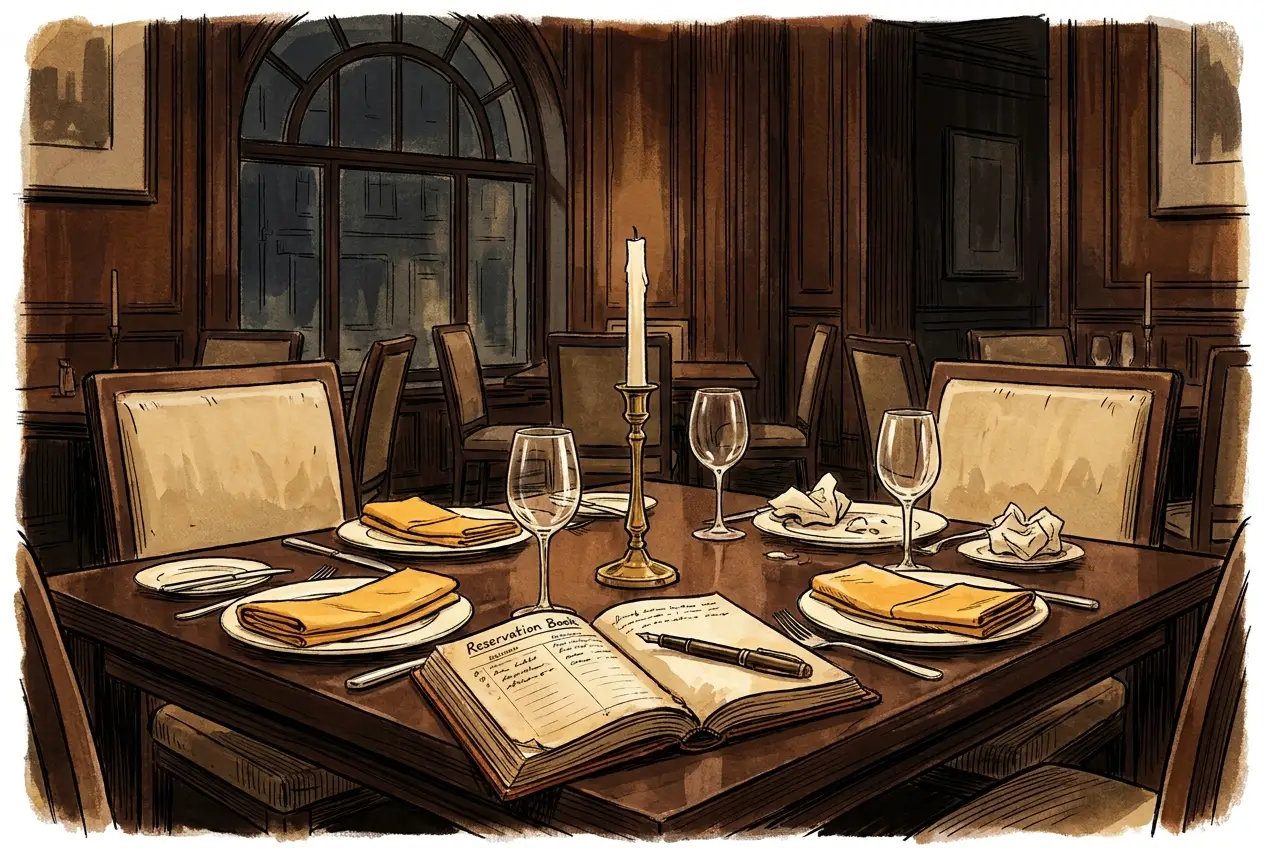

A party of ten booked our best Saturday slot. 7pm, two tables we pushed together by the window. They never showed. No call, no text, nothing. We held those seats forty-five minutes, and the whole time I watched walk-ins come to the door, see the wait, and leave for the place down the street. By the time we gave up and broke the tables down, the night was half gone. That one no-show cost us a lot more than ten empty chairs, and it is the reason I started taking deposits.
So how much should you actually charge? Short answer first, then the math behind it.
The short answer #
Most restaurants charge $10 to $25 per person for a no-show or a late cancellation, or they hold a full prepaid deposit on large parties and prime-time bookings. Fine dining and tasting menus go higher, usually $50 to $100 per seat. Set it at booking and charge it to a card on file. The trigger is a clear cancellation window, usually 24 to 48 hours.
That is the range. Where you land inside it depends on what an empty seat actually costs you, so start there.
What a no-show actually costs #
The fee is not a punishment. It covers what you lose. Most operators lowball it because they only count the empty chairs and forget the rest of the damage.
No-show cost = (covers x average check) + lost walk-in revenue from the held table
Run my party of ten on a $32 average check. That is $320 in covers, gone. But the covers are not even the painful part. We held two prime tables through the busiest ninety minutes of the week, and every walk-in we turned away in that window went somewhere else. On a Saturday we could have filled those tables twice over. Call it another $300 to $500 we never got to ring up, plus the food we prepped for a ten-top that went straight in the trash. One no-show, north of $600 on the night.
Six hundred dollars. From people who clicked a button and forgot they made the reservation.
That is why a $50 deposit on a big party is not greedy. It barely covers it.
How to size the fee #
Tie the number to your average check and your no-show rate. Not to what feels fair. Reservation no-show rates run 10 to 20% for most full-service restaurants, higher on holidays and weekends. One in five big parties ghosting you, at $600 a pop, is real money walking out the door every month you do not have a policy.
Here is where I land most concepts:
| Party size | Suggested deposit or fee | When to require it |
|---|---|---|
| 1 to 5 | None, or a card hold on prime-time slots | Saturdays, holidays |
| 6 to 9 | $10 to $15 per person, or a card hold | Always on weekends |
| 10 to 15 | $20 to $25 per person deposit | Always |
| 16 and up | Full prepay, or $25+ per person | Always |
| Tasting menu, NYE, holidays | Full prepay regardless of size | Always |
The deposit can apply to the final bill when they show. That makes it an easy sell. They are not paying extra, they are just putting a little skin in the game.
Card hold vs hard charge #
Two ways to do this. They land very differently with guests.
A card hold authorizes the card at booking but only charges it if they no-show or cancel late. Softer. Most people are fine with it, because nothing actually moves unless they flake. This is my default for 6 to 12 tops.
A hard charge takes a real prepaid deposit up front. Stronger protection. But it adds friction at booking, and you will lose a few reservations over it. I save it for the bookings that hurt the most when they vanish: 16-plus, buyouts, holidays, tasting menus.
Be honest with yourself here. Charging somebody’s card after the fact makes enemies, and those people leave reviews about it. A hold they agreed to almost never does. The whole thing only works if nobody is surprised by it, so the surprise is the exact thing you are designing out.
The policy language that holds up #
A fee that is buried or vague is worthless. Three things make it stick:
- State it at booking. On the reservation page, in the confirmation text, and again in the reminder. “Parties of 10+ require a $20 per person deposit, refundable up to 48 hours before your reservation.”
- Give a real window. 24 to 48 hours to cancel free. Reasonable windows hold up; “no cancellations ever” gets disputed and reversed.
- Honor it both ways. If you cancel on them, or you cannot seat them within a reasonable time of their reservation, the deposit comes back. That is the part that keeps it fair and keeps the reviews clean.
OpenTable, Resy, and Tock all support card holds and deposits natively. The mechanics are not the hard part. Deciding to enforce it is.
What this looks like in the calculator #
The no-show deposit calculator on this site does the math both directions. Put in your average check, party size, and no-show rate, and it shows you what a no-show costs and what deposit actually covers that loss. It also runs the annual number, which is usually the one that finally gets an operator to turn the policy on.
What to do today #
Pull your reservation no-show rate for the last month, if your system tracks it. Multiply your no-show count by your average check. Then add a conservative number for the tables you held and could not turn. That total is what your missing policy costs you, and it is usually bigger than it feels. Start with the big parties. Set a deposit on 10-plus first, since that is where the damage concentrates, communicate it clearly at booking, and apply it to the final bill when they show. The smaller tables can wait.
Sources: OpenTable, Resy, Tock, National Restaurant Association.
Read next
What's a Good Prime Cost for a Bar vs a Restaurant?
A healthy prime cost by concept, why bars run lower than kitchens, and what your number should be. The benchmark, not the formula. From a 5-year GM.
How to Price a Cocktail (The Pour Cost Math Bars Skip)
How to price a cocktail off its real pour cost, the multiplier that works, and a worked build from spirit to menu price. From a 5-year bar GM.